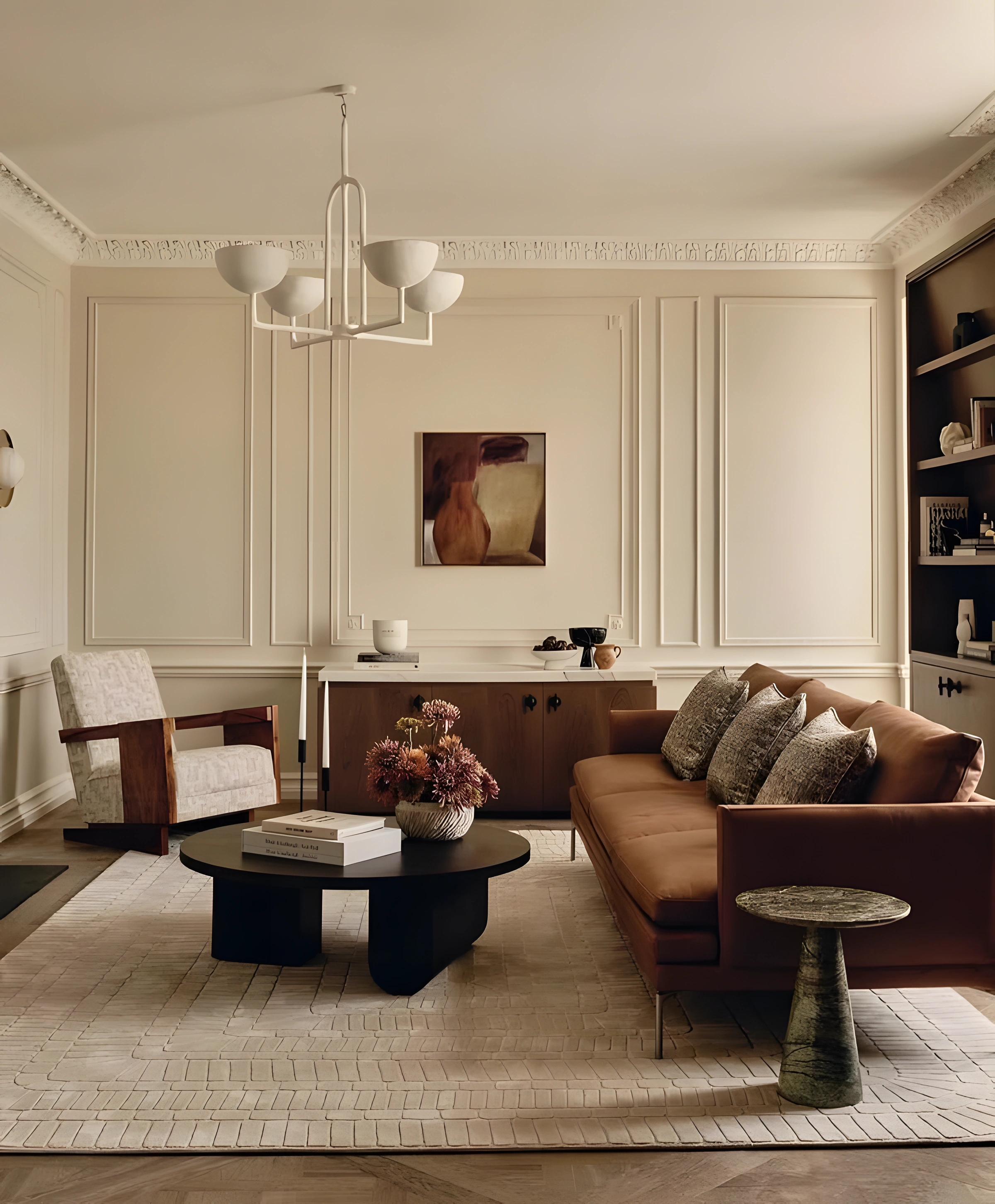
Interior design is often discussed through style.
Minimalist or maximalist. Contemporary or traditional. Warm or cool. Colourful or neutral.
But many rooms that feel wrong do not actually have a style problem.
They have a scale problem.
A beautifully designed sofa can look strangely insignificant in a large room. A pendant can overwhelm a dining table despite being exceptional on its own. A rug can make an entire furniture arrangement feel disconnected simply because it is twenty centimetres too small.
The eye reads these relationships before it evaluates the individual pieces.
Scale is therefore one of the quietest but most powerful tools available to a designer.
Scale is relational
There is no universally correct size for a coffee table, sofa or piece of art.
An object becomes large or small only in relation to something else.
A two-metre sofa can feel substantial in a compact apartment and unexpectedly small inside a five-metre-wide living room.
The same principle applies to almost everything.
The height of a headboard relates to the wall behind it.
The diameter of a pendant relates to the dining table below.
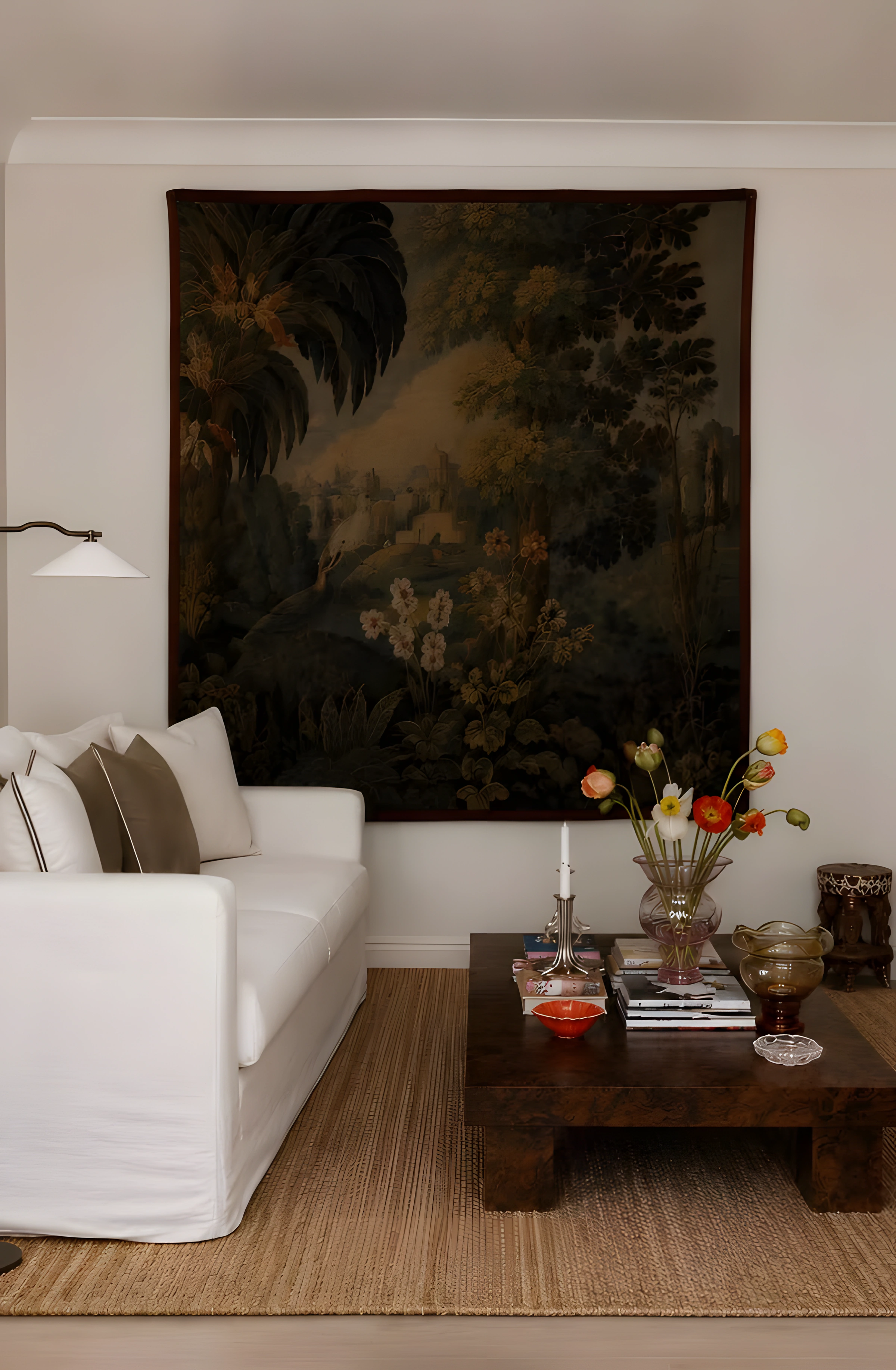
The width of a console relates to the artwork or mirror above it.
The dimensions of a rug relate to the complete seating arrangement rather than simply the available floor.
Designers are constantly working with these relationships, whether consciously or instinctively.


No comments yet. Be the first to share your thoughts.